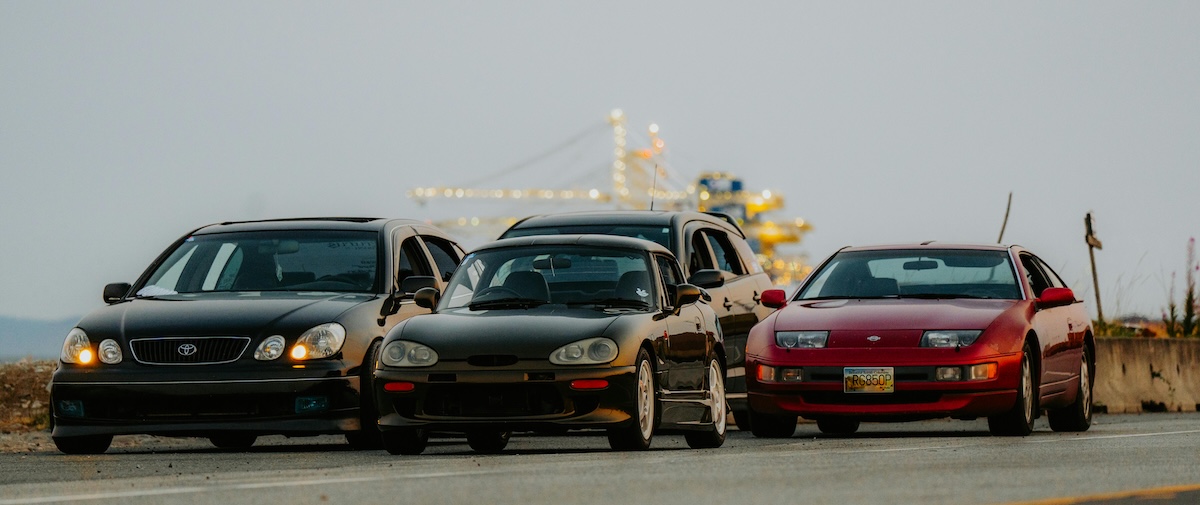
The single most-asked question in the JDM-import world isn’t “is this car worth it” — it’s “is it even legal yet?”
The answer is mostly the 25-year rule: a federal exemption that lets you legally bring a car into the United States that was never built for the US market, as long as it’s old enough. This article walks through exactly how that rule works, the smaller rules that catch first-time importers, and the handful of state-level requirements that no federal rule will save you from.
It is not legal advice. It is the version of the answer you wish your import agent would have given you up front.
Scope: This article covers importing to the United States only. The rules in Canada, the UK, Australia, the EU and elsewhere are different — we’ll be publishing dedicated guides for each in the coming weeks. JDM Radar’s weekly newsletter serves enthusiasts wherever they live; this guide is for the US-bound subset of that audience.
The short version
A car can be imported into the United States, registered, and driven on public roads if all of the following are true:
- It is at least 25 years old, counted from its actual month of manufacture (not its model year).
- It is at least 21 years old for EPA emissions purposes (this kicks in earlier and is rarely the binding constraint by the time the 25-year clock has run).
- Customs paperwork is filed correctly at the port of entry — primarily NHTSA form HS-7 and EPA form 3520-1.
- The vehicle clears whatever state-level titling, inspection, and (in California’s case) emissions hoops your DMV applies. The federal exemption does not override state law.
That is the whole thing. Everything below is detail on each of those four points, plus the one big exception: Show or Display, which lets you import certain culturally-significant cars before they’re 25 years old, with strings attached.
What “the 25-year rule” actually is
When you import a car into the United States, federal law assumes you’ll be driving it on public roads. By default, that means it has to comply with the Federal Motor Vehicle Safety Standards — the FMVSS — which is a long list of requirements covering everything from headlight beam patterns to seatbelt anchors to bumper heights. Cars built for the Japanese (or any other non-US) market do not, as a rule, comply with FMVSS. They were never meant to.
For a long time after FMVSS came into force in the 1960s, this meant you simply could not import a non-conforming car. That changed with the creation of the 25-year exemption, codified at 49 CFR 591.5(g). The text is brief: a vehicle that is at least 25 years old at the date of entry is permanently exempt from FMVSS. No retrofit, no certification process, no inspection. The exemption is automatic and the car is legal at the federal safety level the moment it’s old enough.
The reason for the rule is straightforward: a car that’s been on the road for 25 years has been driven, maintained, modified, and survived long enough that its real-world safety record is more informative than its conformance to standards from the year it was built. The same logic is why 25-year-old US-market cars don’t have to retrofit modern airbags or stability control either.
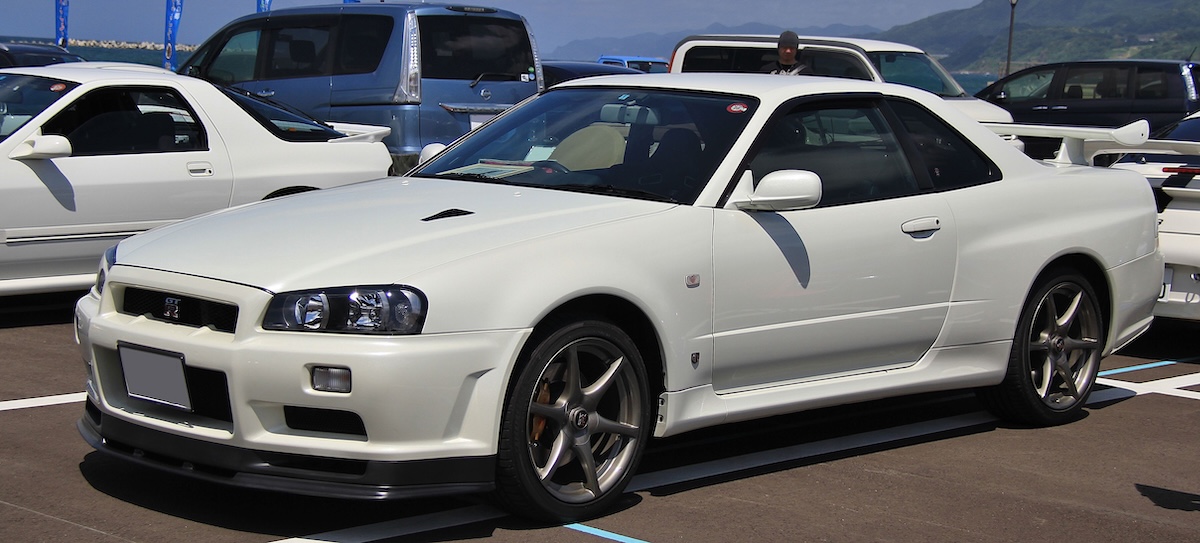
This is the rule that everyone calls “the 25-year rule.” It’s the reason you can buy an R32 GT-R or an FD3S RX-7 today; it’s why the import-eligibility calendar is the most-bookmarked page in the JDM community.
The companion rule: the 21-year EPA exemption
NHTSA isn’t the only federal agency you have to satisfy. The EPA cares about emissions, and it has its own exemption track at 40 CFR 85.1511. The relevant carve-out for our purposes: a non-conforming vehicle that is at least 21 years old is exempt from the EPA’s emissions certification requirement.
In practice this rule is rarely the constraint. By the time a car is 25 years old (eligible under NHTSA), it’s also been 21+ years old (eligible under EPA) for four years already. The only time the 21-year EPA rule matters on its own is when you’re importing a car under the Show or Display program (covered below) — that program waives NHTSA’s 25-year requirement but does not waive EPA’s 21-year requirement.
At the port, both rules are dealt with on the same paperwork run: NHTSA form HS-7 (download) declares the FMVSS exemption box, and EPA form 3520-1 (download) declares the emissions exemption box. Your customs broker or import agent handles the filing, but it’s worth knowing what’s on each form.
How “25 years old” is actually counted
This is where most first-time importers stumble.
It’s not the model year. A car marketed in Japan as a “2001 model” might have been built in October 2000, or in March 2002. US law looks at the actual date the vehicle was manufactured, plus 25 calendar years.
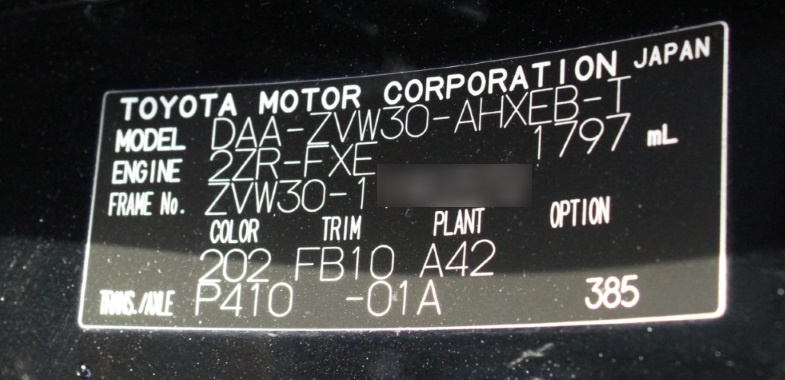
For Japanese cars, finding that date is the catch. Unlike US-market vehicles — which carry a federally-required certification label in the door jamb that explicitly states month and year of manufacture — Japanese-market cars have no equivalent universal requirement. Some have a コーションプレート (caution plate) on a door jamb or under the hood with month and year stamped on it, but practice varies by manufacturer and era, and plenty of cars simply don’t have an explicit date stamp.
NHTSA’s own guidance acknowledges this. When a manufacturer’s label isn’t present, CBP accepts other documentation: an invoice showing the date of first sale, or a registration document showing the vehicle was registered at least 25 years ago. For JDM imports, the documentation that actually gets filed is:
- The Japanese export certificate (輸出抹消登録証明書, yushutsu masshō tōroku shōmeisho) — issued by Japanese authorities when the car is deregistered for export. Carries the chassis number and registration history, and ships with the car.
- The 車検証 (shaken-shō) or its deregistered copy — the Japanese vehicle inspection certificate. The field 初度登録年月 (shodo tōroku nengetsu, date of first registration in Japan) is what’s usually used to establish age. A car first registered in March 1999 was manufactured a few weeks earlier at most — well within the 25-year rule’s tolerance.
- The bill of lading — confirms the vehicle being imported matches the paperwork.
- The caution plate, if it carries a build date — supporting evidence at best. Photograph it before the car ships in case it helps.
For most JDM imports, points 1–3 together are what your import agent files with CBP. The build plate is a bonus, not a requirement.
For most enthusiasts shopping for popular models, the production-start timeline is:
| Model | Production began | First eligible (US) |
|---|---|---|
| R32 GT-R | August 1989 | August 2014 |
| R33 GT-R | January 1995 | January 2020 |
| R34 GT-R | January 1999 | January 2024 |
| FD3S RX-7 (final Spirit R run) | April 2002 | April 2027 |
| Mk4 Supra (JZA80) | May 1993 | May 2018 |
| EK9 Civic Type R | August 1997 | August 2022 |
| DC2 Integra Type R (Japan-spec 98-spec) | January 1998 | January 2023 |
| NSX-R (NA2) | December 2002 | December 2027 |
The eligibility column uses each model’s production-start month. A specific car’s eligibility depends on when it was registered, not just on its model.
A practical consequence: if you find a very late-production example — say, a final-run FD3S Spirit R registered in late 2002 instead of 2001 — it can sit in Japan an extra full year before becoming legal to import. Importers who don’t realise this sometimes try to ship cars that aren’t yet eligible; those cars get held at the port and either re-exported or destroyed by Customs. There is no grey area at the federal level.
Show or Display: importing sub-25-year cars
There is one official way to import a car under 25 years old: the Show or Display program, run by NHTSA.
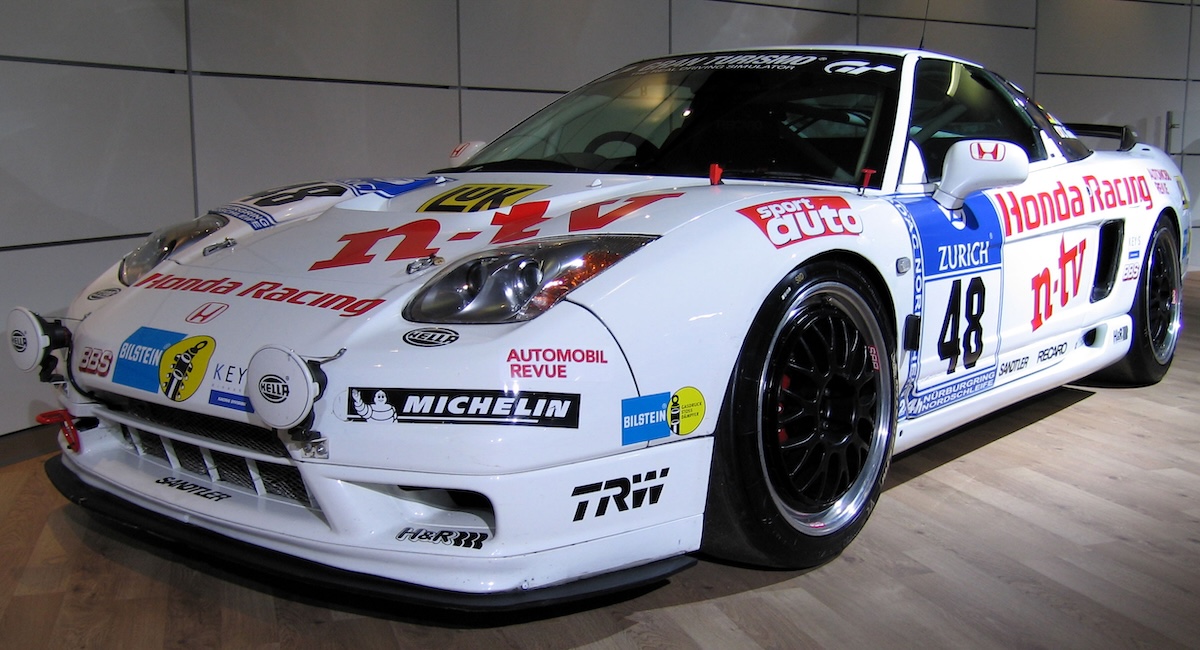
The deal: a car of “unusual historical or technological significance” can be imported if it appears on NHTSA’s approved list. The list is finite and curated — it is not a vehicle you can just argue your way onto. As of the latest publication, it includes models like the Nissan Skyline GT-R Nismo Z-Tune, the Honda NSX-R, the McLaren F1, certain Ferraris, the Bugatti EB 110, and a handful of other genuinely rare cars. A list of approved models is maintained at nhtsa.gov and is searchable.
If your car is on the list, the process is:
- Petition NHTSA to import that specific vehicle (not just a vehicle of that model). You file paperwork identifying the VIN.
- NHTSA reviews and approves, typically over weeks to months.
- The car is imported and must be marked as Show or Display.
- The car is mileage-restricted to 2,500 miles per year, full stop. NHTSA can audit. Driving it more puts you in violation, with the car subject to seizure.
- EPA’s 21-year rule still applies independently. Show or Display gets you past NHTSA’s 25-year requirement, but if your car is younger than 21 years old, you also need EPA approval — which usually means the car has to pass current US emissions standards. For most sub-21-year-old performance JDM cars, this is the harder hurdle. Show or Display isn’t a back door around emissions.
In practice, Show or Display is most often used by collectors who want a specific historically-significant car early — an NSX-R or a Nismo Z-Tune — and accept the mileage limit. It’s not a route to “I want to daily-drive an R34 GT-R before 2024.” It can’t do that for you, no matter how much you’re willing to pay.
State-level requirements
Federal eligibility isn’t the end. Once your car clears Customs, you still have to register and title it in the state you live in, and most states have their own requirements layered on top.
The good news: in most states, a 25-year-old import from Japan registers similarly to any other older used car. You bring the bill of sale, the foreign title (or the Customs entry document), proof of HS-7 / 3520-1 filing, and pay your state’s standard fees.
The bad news: a few states are difficult.
California is the country’s most-discussed case. California’s Bureau of Automotive Repair (BAR) requires every vehicle from model year 1976 onwards to pass a smog inspection appropriate to its model year. Most JDM cars don’t carry US-spec emissions equipment and won’t pass without retrofitting — which is expensive and not always practical. The legal workaround is the direct-import path, which still requires the car to be evaluated and certified by a California Bureau of Automotive Repair laboratory. It is not impossible, but California is the state where importers are most likely to recommend you simply register the car elsewhere first.
Massachusetts has historically required a vehicle safety inspection that can be hard to pass with right-hand-drive cars and non-DOT-compliant glass.
Other states — Texas, Florida, most of the Southwest and Southeast — are notably easier. Many JDM importers register their cars in Montana through a registered LLC for this reason, though the legality of that arrangement depends on where the car is actually garaged and driven. Don’t follow that path without talking to someone who actually knows the rules in your state.
The federal exemption gives you the right to bring the car into the country. State law decides whether you can drive it on public roads where you live. Those are two different questions.
Common misconceptions
A handful of myths get repeated often enough to be worth knocking down explicitly.
“The car has to have been originally sold in Japan.” No. The 25-year rule applies to any vehicle that was not built to FMVSS, regardless of which non-US market it came from. A Japanese-domestic-market car, a European-market car, an Australian-spec car — all the same rule. The relevant fact is that the car is non-conforming, and 25+ years old.
“The 25-year rule means California is fine too.” No. California’s smog rules are independent of NHTSA’s safety exemption.
“Show or Display lets me drive an R34 GT-R as my daily.” No. 2,500 miles per year, period. Plus you’d still need to clear EPA — and the emissions hurdle is the harder one for performance cars.
“Once 25 years old, the car is permanently legal everywhere in the US.” Federally, yes. But the state-level rules above still apply, and they don’t always grandfather imports.
“My import agent said it’s eligible — that’s enough.” Verify the manufacture date yourself, before the car ships. The agent is doing dozens of cars; they will sometimes get the date wrong, especially for late-production examples. A car held at the port costs more than a car you turned down.
“Right-hand drive is illegal in [my state].” Almost certainly false. Federal RHD restrictions apply to new commercial vehicles for postal service routes, not to private passenger cars. A small number of states have additional rules but outright bans are rare. Check your state’s actual statute, not a Reddit comment.
What actually happens at the border
Once you’ve bought a car in Japan and the eligibility math checks out, the import flow is roughly:
- Shipping booked from Japan — usually via RoRo (drive-on, drive-off) or shared 40-foot container. RoRo is cheaper and faster; container is safer for high-value cars.
- Arrival at a US port — most JDM imports come in through Long Beach (LA), Tacoma, Houston, Jacksonville or Baltimore. Smaller ports also receive RoRo.
- Customs clearance — your broker files entry documents, including HS-7 (NHTSA) and 3520-1 (EPA). The car is physically inspected; Customs verifies the manufacture date matches what’s on the paperwork.
- Duty paid — 2.5% of the declared value for passenger cars, no exemption.
- Released to you — the car is dropped off either at your specified address or at the port for pickup.
- State titling — you take the Customs entry, the foreign title, your bill of sale and (where applicable) inspection results to your DMV. The DMV issues a US title.
- Insurance, plates, drive — same as any other private car.
A clean import, with everything in order, takes 6 to 10 weeks from auction-win to plates on the car. A bad import — a car held for incorrect paperwork, or rejected on a manufacture-date discrepancy — can take many months and cost many thousands extra.
What to do next
If you’re at the point of actually shopping, eligibility is only step one — the harder problem is finding a clean, well-priced car among the dozens that come up at Japanese auctions every week. That’s exactly what JDM Radar does:
- Read this week’s sample issue to see how we present the cars we feature — make, model, year, mileage, condition notes, and what to look for.
- Browse the newsletter overview to understand the format and what subscribing actually gets you.
- Start a free 1-month trial if you want full access to the archive, source links, and the rest of this week’s curated picks.
This article is informational, not legal advice. Federal rules can be amended; state rules can change every legislative session. Verify current requirements with NHTSA, EPA, and your state DMV — or with an import broker you trust — before you commit to a vehicle.